RESOURCES · GRID CAPACITY
Grid congestion: how to grow and electrify when your connection is full
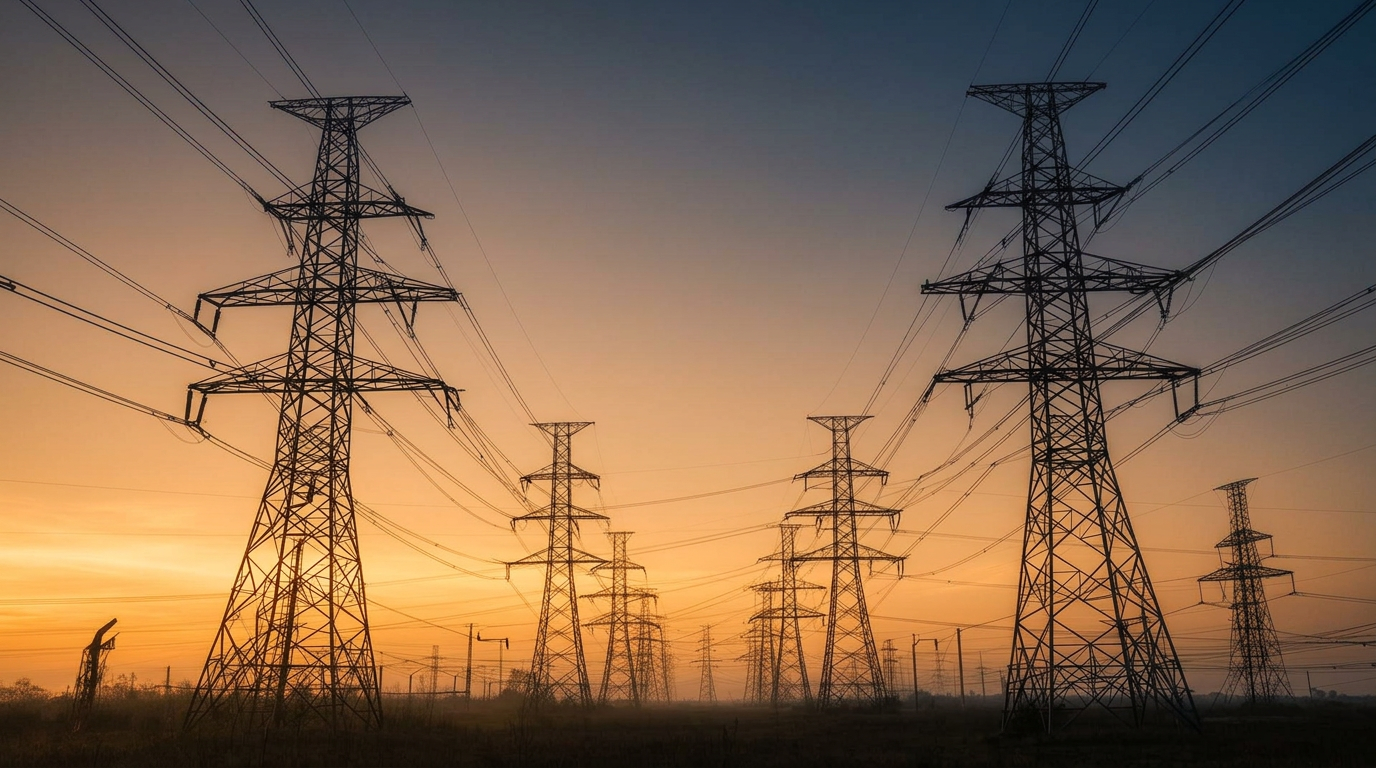
Across Europe, more companies are asking for grid capacity than grids can connect. The rules differ per country and change fast. The design logic is the same everywhere: a site that can steer its own load turns its connection limit into a design parameter.
Updated 19/10/2026 · 6 min read · PerPetum Energy BV
~ 700 GW
of renewable and large-load projects wait in grid connection queues, in the European countries that publish data (Ember, 2026).
16+
EU Member States face grid connection queues (European Commission, 2025).
2 to 10 years
connection delays reported by industrial companies, even for small projects (E3G, 2026).
1
Grid congestion is a shortage of capacity at peak moments
the road is there, sometimes a lane closes
There is enough electricity. The capacity on a specific part of the grid, at specific moments, is limited. Grid operators plan with the N-1 principle: the grid must keep working when one component fails. What they can safely offer is therefore lower than what is physically in the ground.
Think of a road that is wide enough most of the time. When one lane closes for works, traffic jams form. Users with a flexible arrangement are the first to give way.
Congestion comes in two stages
-
Physical congestion
In some regions, grid operators limit or refuse new capacity today.
-
Expected congestion
In other regions, operators see the limit coming and start offering flexible connections before it arrives. Flanders is an example, according to its grid operators Fluvius and Elia.
Congestion can sit on the offtake side, the injection side, or both. A site can have room to consume and no room to export its own solar power, or the other way around.
Background: why grid congestion is becoming structural for energy-intensive sites
2
What you build
four routes, one system
- 1
Flexible connection contract
When the site can shift in time. You gain access now, in some countries at a lower network tariff, without an installation of your own.
- 2
Battery as a bridge
When capacity falls short, or when the grid operator reduces your capacity. The battery covers the gap and the process keeps running.
- 3
Solar plus battery
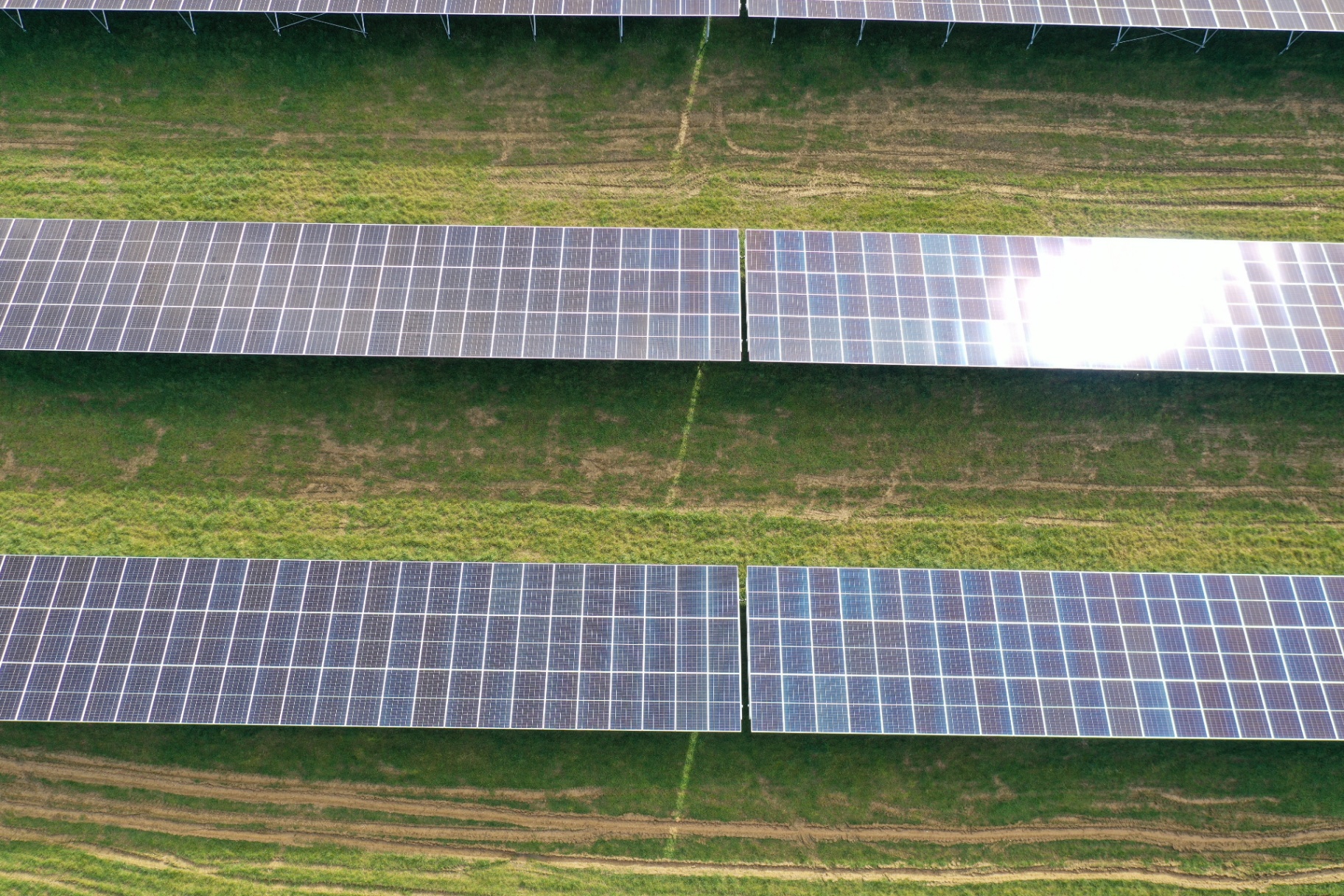
When you want to grow. More consumption within the same connection: electrify without waiting for reinforcement.
- 4
Peak shaving
Lowers your peak, and with it the capacity you contract and pay for. It frees room to grow.
Why the peak matters
Most industrial sites reach their connection limit only a few dozen hours per year. Those hours determine the contracted capacity, and the cost of a heavier connection.
The energy management system (EMS) is the strategic backbone of the site. It measures the connection and decides every quarter hour what runs, what charges and what waits. On-site generation carries the electrification. The grid carries the rest.
- Without battery
- With battery
Heat: the strongest lever
~ € 10 /MWh
added to the price of natural gas by ETS2, from 2028
Gas prices are volatile. ETS2, the new EU carbon price on fuels, is expected to add around € 10 per MWh to natural gas from 2028. Replacing gas-fired heat with e-boilers or heat pumps removes that exposure from one of the largest cost lines on site.
It also adds a large new load. A 5 MW e-boiler without control means 5 MW of extra peak. With control, it becomes the largest flexible load on site. Heat can be stored, so the e-boiler heats when electricity is cheap or abundant on site and pauses at the connection limit. We select the EMS that fits the site, independent of brand.
In almost all cases, yes. The installation absorbs the difference: on-site generation, storage, controllable heat and one EMS. We follow your production process and design around it.
Which route fits your site depends on your consumption profile and your local grid. That is what the quickscan calculates.
Request the quickscan3
What it delivers
one installation, several value streams
- 1
Growth within your connection
Electrify and expand without waiting years for grid reinforcement.
- 2
Lower peak costs
A lower contracted peak reduces capacity-related network charges, where your tariff includes them.
- 3
Price spread
The battery charges when electricity is cheap, including hours of negative prices. It deploys that energy on site when prices are high.
- 4
Flexibility services
In several countries, grid operators pay sites to reduce offtake or injection on request. Fluvius, for example, buys local flexibility through a market platform. The EMS responds to these signals within the agreed limits.
- 5
Avoided levies and network tariffs
Every MWh you generate and use on site avoids the levies and network tariffs on grid electricity. The amount depends on your country, voltage level and volume.
Condition: you can steer, and you can prove it
Grid operators assess flexibility on measurement data. A battery on its own, trading on price alone or good intentions without data rarely convince them. Poorly controlled storage can even add to congestion. What counts is what the installation demonstrably does at the connection point.
4
One site, in numbers
a Dutch site in a congested area
THE PROBLEM
A heavier connection was not available. The e-boiler meant to cut gas use would push the peak higher. There was no capital budget for an installation that mainly buys grid room.
WHAT WE DID
E-boiler, solar and battery under one EMS, financed by PerPetum. On-site solar carries the e-boiler, the grid carries the rest. The client pays per unit of energy delivered.
1.100 → 860 kW
grid peak, while the site electrifies its heat
~ half
of gas consumption replaced. The rest is winter heat, for a next phase.
~ 45 %
less CO₂ on site
€ 0
upfront investment
Anonymised example of one Dutch industrial site. Results differ per site.
5
Who carries the investment
two routes, your choice
-
Route A: you invest, we build
EPC contract (engineering, procurement and construction): design, permits, construction and commissioning, with operation and maintenance available. You own the asset, the full saving is yours, and the asset sits on your balance sheet.
-
Route B: we invest, you buy the energy delivered
Energy-as-a-Service over the contract term. No upfront investment, off balance sheet. Operation, maintenance and daily market participation are included, with performance guarantees.
When this does not work
-
A flat profile.
A site that runs the same flat line seven days a week has little to shift. On-site generation can still cover part of the profile. Peak shaving adds little.
-
A business case that does not close.
These remain large investments. If the return is too low to finance, we tell you. Often, that means your current setup already makes good use of the connection.
That depends mainly on your balance sheet and your room to invest. Under route B, we design for financeability from the start. You know upfront which design works technically and can be financed.
6
How the rules are changing, country by country
three shifts, four markets, updated 19/10/2026
Every market applies the EU framework in its own way and at its own pace. Three shifts show up everywhere.
- 1
From first come, first served to readiness and grid value
Most countries still allocate capacity in order of request. Several are adding criteria: how mature a project is, and whether it relieves or loads the grid. The Netherlands, for example, gives priority to users who demonstrably free up capacity for others.
- 2
Flexible connections become a standard option
The EU's 2024 electricity market reform asks regulators to set up flexible connection agreements where grid capacity is limited. You connect now and accept that your capacity can be reduced at agreed moments. Once the grid is reinforced, the agreement converts to a firm connection.
- 3
Flexible sites connect first
Industrial companies interviewed by E3G report the same pattern. Projects that can demonstrate flexibility gain an advantage in congested areas. Flexibility has become a connection asset.
Snapshot · 19/10/2026
In Flanders, grid operators describe today's situation as expected congestion. Fluvius publishes a congestion map based on expected congestion in 2035. Its Fall-Back Flex contract gives companies their full requested capacity, with a temporary reduction when congestion threatens. Wallonia is preparing a legal framework for flexible connection contracts.
Snapshot · 19/10/2026
RTE is reforming how consumer connection requests are handled, with the aim of accelerating industrial electrification. New queue management rules were approved in 2026. To enter the queue for the transmission grid, a project must show proof of maturity or pay a flat fee of € 1.000 per MW requested.
Snapshot · 19/10/2026
The federal cabinet approved a draft grid package on 29/07/2026. It allows grid operators to make a connection conditional on a flexible connection agreement where grid constraints are demonstrable. TenneT Germany reported 181 formal connection requests for about 77 GW in July 2025. The package is still a draft and can change.
Snapshot · 19/10/2026
Congestion is physical in large parts of the grid. TenneT reported 212 requests for about 38 GW on its waiting list in February 2026. Regional grid operators reported more than 14.000 requests for about 9 GW. Alternative transport rights and priority for congestion relievers are in place.
Detailed guide for the Netherlands (in Dutch)File early, and check the conditions. Some grid operators now ask for a deposit or proof of project maturity to enter the queue. A flexible connection usually does not require you to withdraw your request for firm capacity.
Your grid operator confirms what applies to your site. We help you translate it into a design.
Talk to an Industrial Energy Partner7
Two ways to start
run the numbers, or talk first
FREE QUICKSCAN
Run the numbers for your site
We work with your site's quarter-hourly data. Within two weeks, you know whether there is something to gain, which route fits and what it delivers. If there is nothing to gain, we tell you that too.
What you need: 12 months of quarter-hourly data, the ID of your connection point and your latest invoice.
30-MINUTE CONVERSATION
Talk to an Industrial Energy Partner
An open conversation about your connection, the situation on your local grid and the configurations that work on comparable sites. Useful if you do not have the data at hand yet. We help you request it.
Request the quickscan
- 1
12 months of quarter-hourly data
To see how many hours per year the site reaches its limit, and what can shift.
- 2
The ID of your connection point
EAN in Belgium and the Netherlands, PDL or PRM in France, Zählpunkt or MaLo-ID in Germany. To check the situation on your local grid.
- 3
Your latest electricity and gas invoice
It shows the tariffs of your site.
Frequently asked questions
Start with your grid operator. In several countries, operators publish capacity or congestion maps, for offtake and for injection. A site can have room on one side and none on the other. Then ask your grid operator what your site can get, by when and on which terms.
That depends on what is installed on site. A battery can bridge the reduction so a process line keeps running. With a flexible connection, the terms of each reduction are agreed in advance.
The logic of measurement data and controllable capacity applies everywhere. The rules, thresholds and contracts differ per country and per grid operator. Our Industrial Energy Partners work across Belgium, the Netherlands, France and Germany.
Under the EU framework, a flexible connection agreement converts to a firm connection once the grid is reinforced, based on criteria set per country. Where reinforcement is not the most efficient solution, a flexible connection can also be permanent.
The information on this page is indicative and not exhaustive. It does not constitute legal or regulatory advice. Rules, thresholds and tariffs were checked on 19/10/2026 and may change. Have your situation confirmed by your grid operator and your own adviser before you decide.
Sources: Ember, grid connection queue analysis (04/2026) · European Commission, Guidance on efficient and timely grid connections (12/2025) · Directive (EU) 2024/1711, Article 6a · E3G, Industrial electrification in the EU: blocked by the grid? (03/2026) · TenneT and Dutch regional grid operators, waiting list figures (02/2026) · ACM, prioritisation framework for transport requests (12/12/2025) · Fluvius and Elia, congestion map and connection data (2026) · Walloon Government, draft decree on network access (13/05/2026) · CRE, RTE connection procedure (2026) · German Federal Cabinet, draft grid package (29/07/2026) · TenneT Germany, position paper on grid connections (07/2025) · Netbeheer Nederland, N-1 principle and capacity map (2026) · PerPetum client model, anonymised example of one Dutch industrial site.